How Did Wright Intend Gallerygoers to View the Art Displayed Inside the Guggenheim Museum?
The Guggenheim Museum

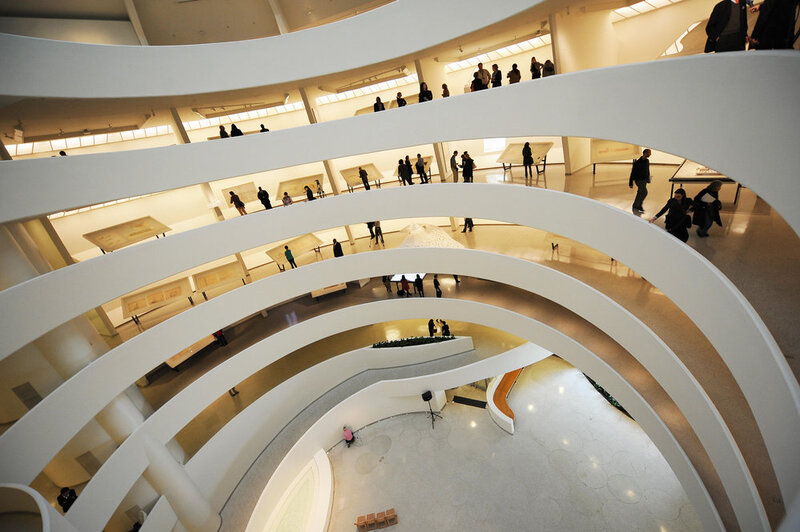
A gimmicky view of the interior walkways at the Guggenheim Museum. The New York landmark marks its 50th anniversary with an exhibition titled "Frank Lloyd Wright: From Within Outward." Stan Honda/AFP/Getty Images hide caption
toggle caption
Stan Honda/AFP/Getty Images

A contemporary view of the interior walkways at the Guggenheim Museum. The New York landmark marks its 50th anniversary with an exhibition titled "Frank Lloyd Wright: From Within Outward."
Stan Honda/AFP/Getty Images
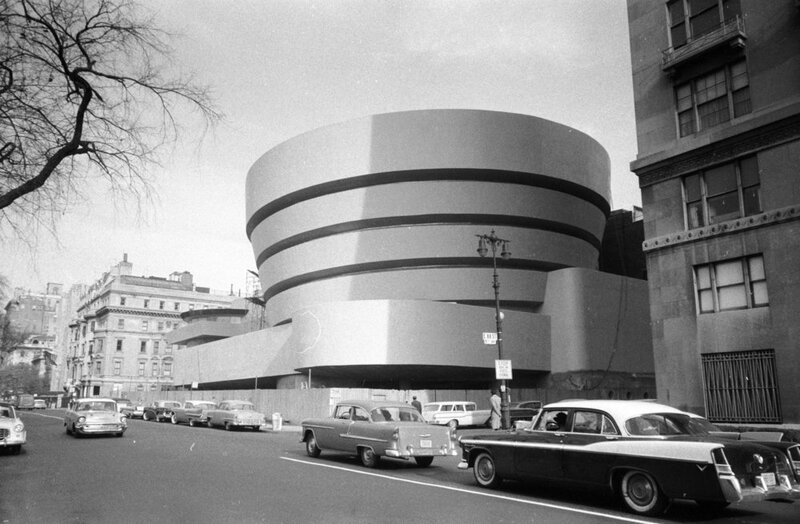
50 years ago, an object landed on Fifth Avenue in New York City. Information technology looked like it had dropped from outer space, and was treated as such.
Author Norman Mailer said it "shattered the mood of the neighborhood" — "wantonly" and "barbarically."
Prominent avant-garde artists signed a petition against it, even though it was meant to concord contemporary art.
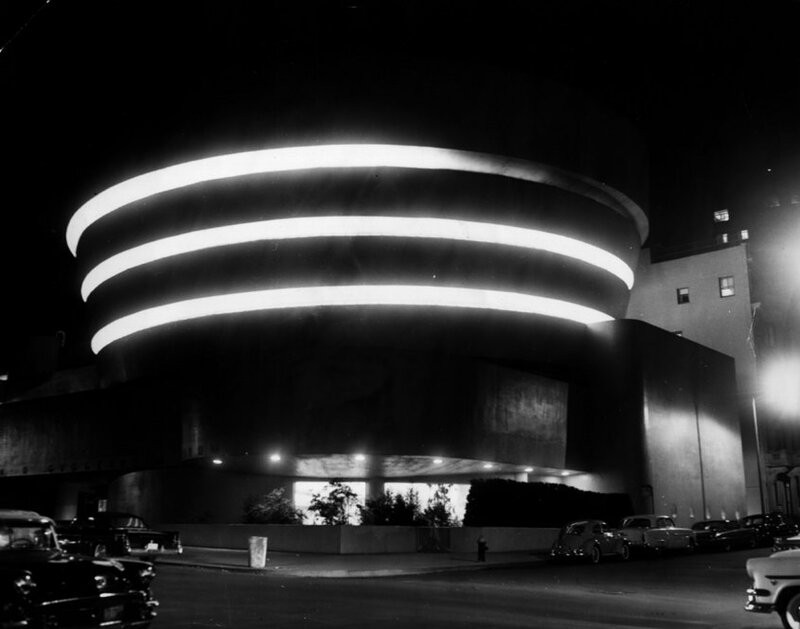
When it opened, the Solomon R. Guggenheim Museum bankrupt a lot of centuries-old architecture rules. Its pattern not only shattered the squared-off line of the apartment buildings information technology was prepare against, but it also crushed the notion that buildings should have a ground floor, a first floor and so on.
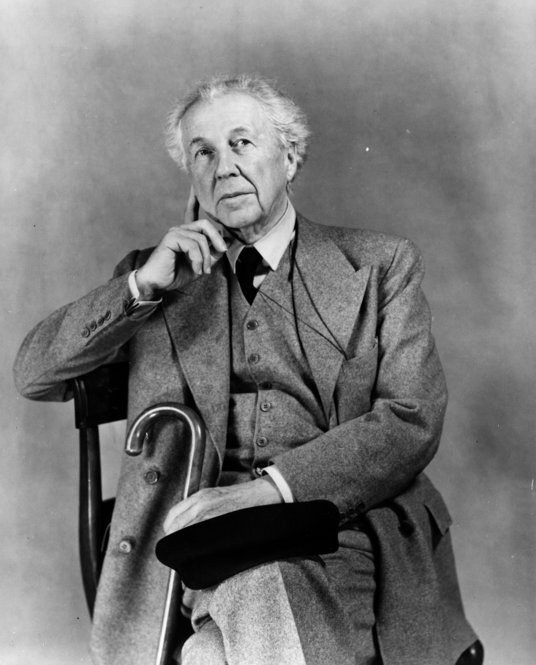
Designed by Frank Lloyd Wright, the Guggenheim earned many a dubious clarification upon its opening. Critics chosen it "inverted oatmeal dish," or a "hot cross bun." And in the face of such hostility, Wright dedicated his piece of work.
"Somebody said the museum out here on Fifth Artery looked similar a washing machine," Wright said. "Well, I've heard a lot of that blazon of reaction, and I've e'er discounted it as worthless, and I think information technology is."
Today, tourists come up from around the globe to come across the museum.

Designed by Frank Lloyd Wright, The Guggenheim Museum, celebrates 50 years on Fifth Artery and it'due south acceptance into architectural society. George Heyer/Getty Images hide caption
toggle caption
George Heyer/Getty Images

Designed by Frank Lloyd Wright, The Guggenheim Museum, celebrates 50 years on Fifth Artery and it's acceptance into architectural society.
George Heyer/Getty Images
Compages That Doesn't 'Lie Down And Play Dead'
"I think the legacy of this building is in the bulletin that architecture does non have to lie down and play dead in front of art," says Paul Goldberger, architecture critic for The New Yorker. "That there are other means to prove art than in a neutral infinite. That an architect can practice something that's powerful in itself and that enhances the feel of looking at art."
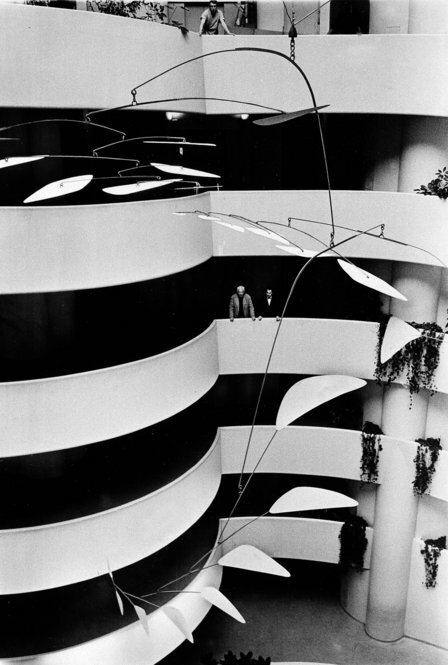
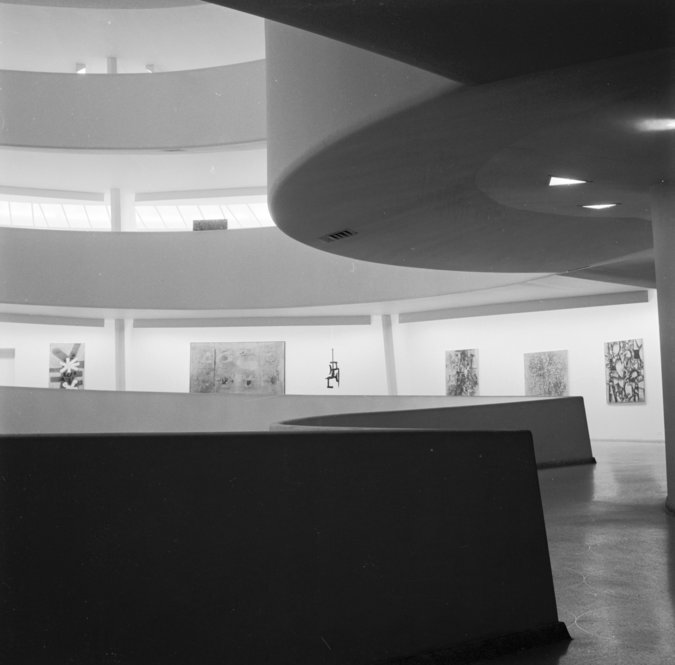
Within the edifice, a ramp spirals upwards, with the museum's collection displayed along the ramp as it coils toward the museum's glass ceiling. Some say if you stand on a slight slant and tin can't go shut enough to a piece — or far enough abroad — information technology can be hard to fully appreciate some of the fine art.
Martin Pedersen, editor of Metropolis magazine, admires the edifice but isn't so certain virtually the ramping concourse.
"I've never once felt comfortable underfoot, viewing art, and I've been to many, many, many exhibitions," Pedersen says. "You feel always slightly off-kilter watching fine art at that place."
But Frank Lloyd Wright scholar and Harvard professor Neil Levine says that was the intent, and the resulting infinite can help many types of art put y'all into "a daydream."
"In other words, it's a space that'due south — I don't desire to say 'surreal,' but information technology's outside the boundaries of reality," Levine says. "It'south a space of walking through and being relieved from the normal weather condition of the world, because there's no horizon line, there is no direct path, at that place'due south no verticals, there's no horizontals. And then everything is dissimilar from 'the real world.' "


A New Kind Of Space For A New Kind Of Fine art
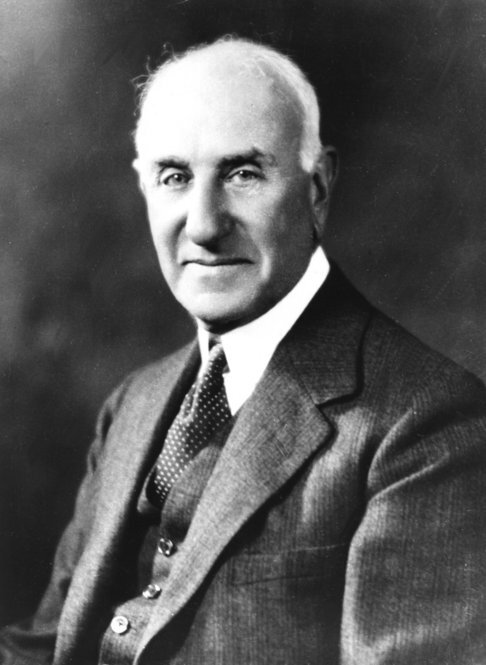
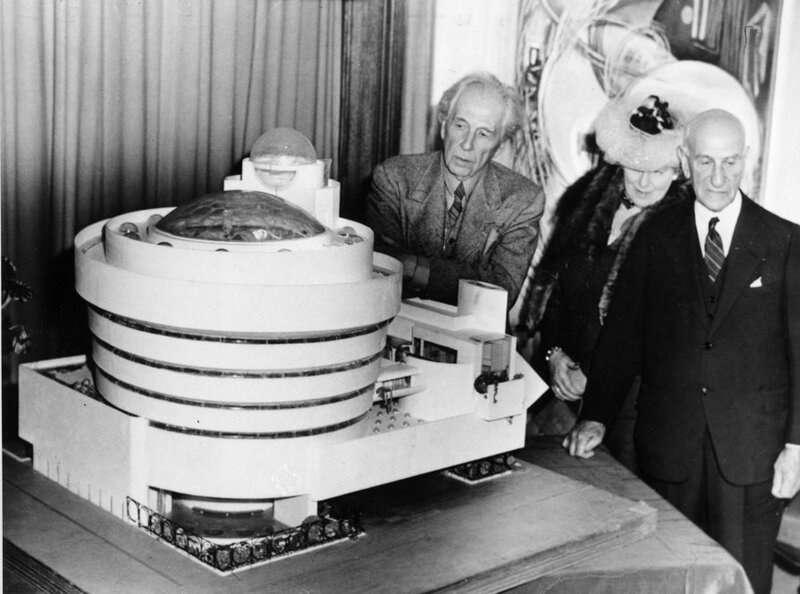
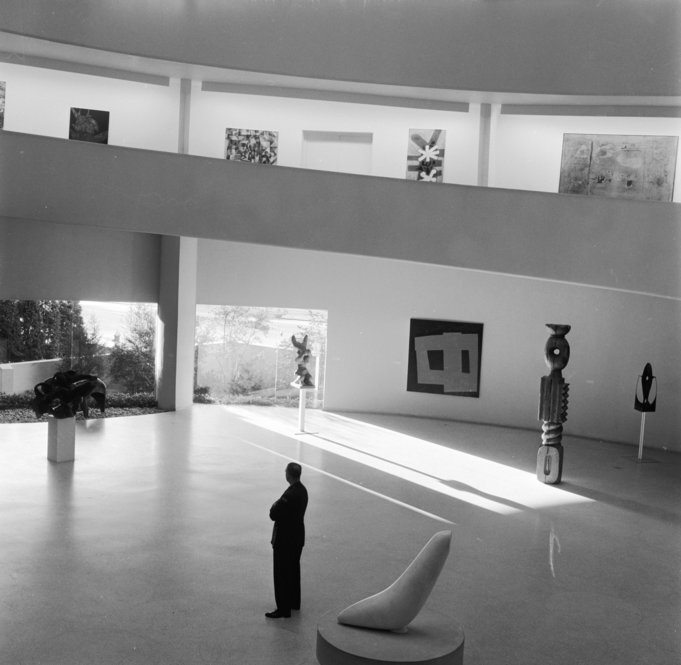
The building isn't the simply affair that was different. So were the paintings that Solomon Guggenheim nerveless: radical new abstract art for a new world, a world suffering from the effects of World War II. It was specifically to showcase that collection that Guggenheim and his curator asked Wright for what they chosen a "Temple of Spirit."
Wright's vision wasn't fully realized; he wanted visitors to accept a glass-tube lift to the tiptop of the building, relax nether a glass sphere with a telescope and garden, and so — primed for the feel — stroll down the ramps to the art.
"Which would exist a very gentle way of perceiving the works of art in the building," says Neil Levine, before swiping a line from Wright himself: "Permit the lift do the lifting and then the visitor could do the drifting."
Bruce Brooks Pfeiffer, director of the Frank Lloyd Wright Archives, says at present that curators understand the unique nature of the Guggenheim space, the exhibitions work amend.
"What's amazing, when you're in the building, when you're on the ramp, yous can see where you are, naturally, but you tin come across where you've been and you tin can see where you're going," Pfeiffer says. "Information technology'due south equally though you are in control of the time-space continuum."
An Icon Of 'Spirit, Passion And Feeling'
Wright besides designed the Guggenheim as a place to see other people and to be seen. It helped usher in the era of museum branding and spawned every freestyled sculptural museum of the past half-century. The most famous of them might be another Guggenheim: the one in Bilbao, Spain, past architect Frank Gehry.
Gehry's next project — the Guggenheim for Abu Dhabi — is moving forward, but in the electric current economic climate, the architect says, it's getting harder to build works with "spirit, passion and feeling."
"I call up that throwing architecture under the coach is being touted by the people who can't do the other," Gehry says. "And this is a great excuse to trash those who can, and say nosotros're through with those guys, and now we're going back to straight simple, minimalist, idiocy again. Cold uncomplicated sterility. It'south got to be light-green, though! As long every bit information technology's greenish, you're OK."
That's today'due south way to salve the globe. Fifty years ago, Solomon Guggenheim and his curator thought experiencing their new kind of art — in Wright'southward new kind of space — was "the merely solid way to peace."
Did we get there, or, as in the Guggenheim, are we going around in circles?
Edward Lifson writes about architecture at world wide web.EdwardLifson.com.
Source: https://www.npr.org/2009/08/05/130274408/guggenheim-museum-the-spiral-that-broke-all-the-rules
0 Response to "How Did Wright Intend Gallerygoers to View the Art Displayed Inside the Guggenheim Museum?"
Post a Comment